
Canva Launches Craft as First In-House Image Model
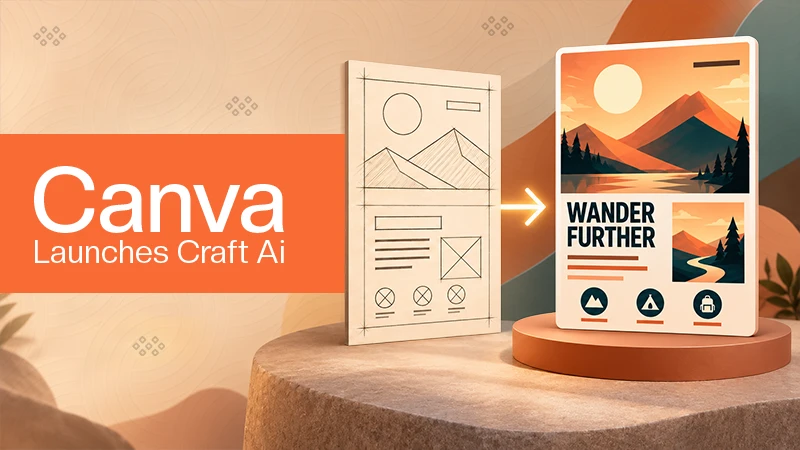
Canva, a visual design platform, has unveiled Craft, the company’s first in-house AI model for generating images to be made publicly available. Developed by Canva Research, the new model creates images in high-definition resolution of 2K pixels for more than 30 aspect ratios. This software release is meant to help the company incorporate advanced capabilities for image generation into its design platform without using third-party AI solutions.
The two-step technical structure of Craft allows for proper arrangement of text, objects, and visual elements when planning an image before rendering it. Craft is highly effective in generating marketing material, portraits, and natural scenery due to its training on millions of design templates created by professionals.
Craft outputs can be used within Canva’s Magic Layers feature to turn generated images into editable design files. In practice, Craft is already accessible today to users of the global platform and outside developers through its public API. Future iterations that include versions called Craft-fast and Craft-ultrafast are under development in order to reduce the cost of inference for enterprise workflows at scale.
In addition, the forthcoming support for the Canva Model Context Protocol will allow AI agents to autonomously create graphics in automated design pipelines. Such developments represent an ongoing industry-wide trend towards developing proprietary models by consumer software companies.
The development of bespoke generative models allows for long-term cost savings and optimizes creative software for specific use cases. Craft by Canva is one of the significant milestones achieved in the world of creative software, showcasing how an internal model can close the divide between the generative nature of artificial intelligence and design editing software.
The organization ensures platform retention while reducing dependence on external APIs through its control of proprietary AI models. Moreover, incorporation of native model architectures will enable Canva to insulate its core business from rising API costs from third parties, while at the same time adding value to its overall enterprise business proposition.
As cloud-native platforms grow in scope, proprietary generative models will form a vital strategic moat for predictable margins and unparalleled control of personalized visual workflows.


