
Apple May Surprise Tech Fans With Camera-Equipped AirPods Sooner Than Expected
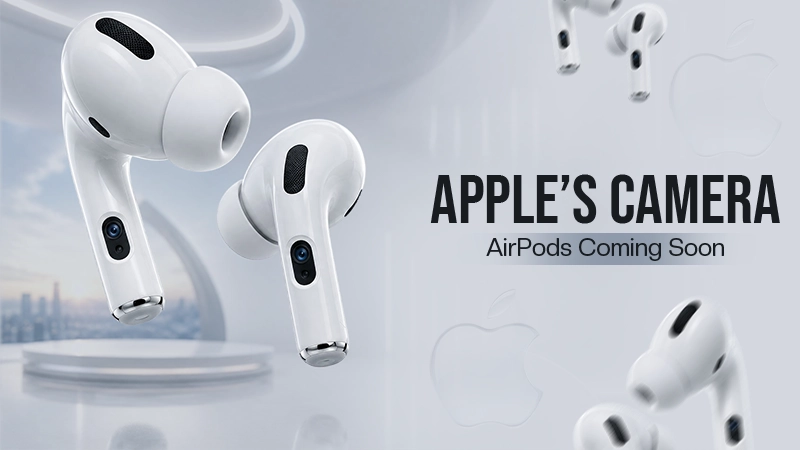
Visual capabilities will soon become one of the biggest highlights of smart earbuds. Despite previous rumors indicating that Apple’s futuristic vision-capable AirPods would hit the market in 2027, recent software leaks and roadmaps reveal that they could reach store shelves sooner. It seems that the Cupertino company is ready to roll out its first set of vision-capable earbuds in advance of the expected schedule.
As usual, Apple has been working on two competing models internally, the B790 and B798. While at first, most attention was paid to the B798 due to delays in development and pushbacks to 2027, the B790 version has become the more promising model lately.
Recently, developer Sam Henri Gold has discovered mentions of the B790 model in early iOS 27 beta. In addition, Mark Gurman from Bloomberg confirmed that the hardware is currently listed in Apple’s roadmap and is scheduled for September along with new iPhone models.
Instead of simply taking photographs, these minuscule optical sensors have been designed to support Apple’s rapidly growing Visual Intelligence network. Using computer vision technology to scan the environment and analyze physical objects on the go, this ear-mounted hardware will be able to respond to contextually based questions, interpret gesture commands without contact, and adjust spatial audio sensing of mixed reality devices such as the Vision Pro.
In order to integrate all of these additional capabilities, the new device is said to include somewhat longer stems when compared to the existing AirPods Pro generation. An LED light will also be added to the device to notify users that sensor data is currently being transmitted to the cloud servers.
Thanks to computer vision right at your ears, Apple is quietly building the base of displayless personal computing of the future. If such revolutionary models appear in the market later this fall, this will be a huge step forward from wireless audio devices to fully contextual AI assistants.