How Caterpillar’s Mining Automation Playbook Is Reshaping Its Enterprise AI Strategy
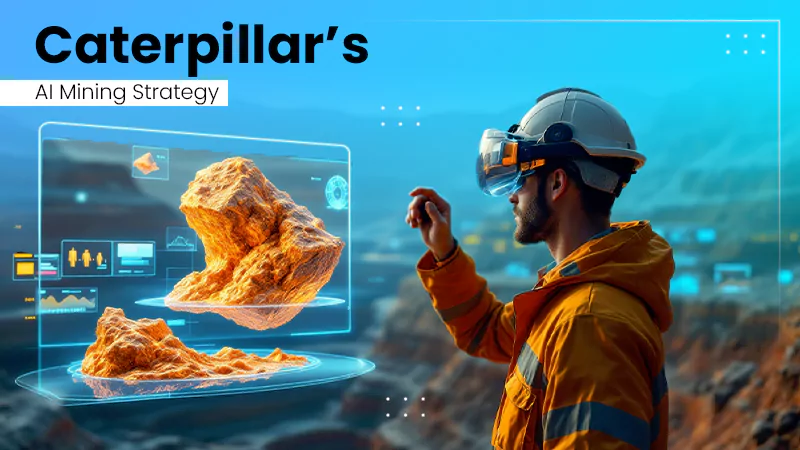
Using AI successfully within complex physical environments is still one of the most challenging aspects of operations in technology. To overcome this limitation, heavy equipment producer Caterpillar is leveraging what it has learned about deploying AI through decades of automating its haul trucks, drills, and loaders in mining pits.
Speaking at the Ai4 event in Las Vegas, Chief Technology Officer Jaime Mineart explained how the industrial leader is expanding its autonomous capability to dynamic environments like quarries and construction sites.
An impressive case here is the voice-controlled Cat AI Assistant that helps to debug and find replacements for parts on-site. The intelligent solution is leveraging the company’s huge data ecosystem to analyze telemetry on 1.6 million connected assets and 16 petabytes of data.
In addition to field solutions, Caterpillar relies on internal AI agents to modernize its legacy code, automate testing, and create digital twins for scanning in manufacturing.
But, as noted by Mineart, “technology” is the lesser half of the challenge: “The main obstacle is not getting machines to perform the job, it’s getting people to work with autonomous systems.” For this purpose, Caterpillar is allocating $100 million in the next five years to teach its 118,000-strong global workforce about robotics, artificial intelligence, and automation.
It is fascinating that Caterpillar’s link to the wider artificial intelligence revolution is directly connected to its financial performance. The high demand for data center power generation equipment resulted in an unprecedented $20.5 billion in revenues in the second quarter, with its power segment revenue growing 72% to $3.10 billion.
Going from driverless pit trucks to company-wide software means graduating from being able to do something to doing it routinely. With its massive telemetry databases and extensive employee training programs, Caterpillar is showing that successful implementation of artificial intelligence is less about technological demonstrations and much more about seamless integration of smart systems into the workflow.