
Public Search, Private Data: Technical Oversight Exposes Shared Claude AI Chats to Google
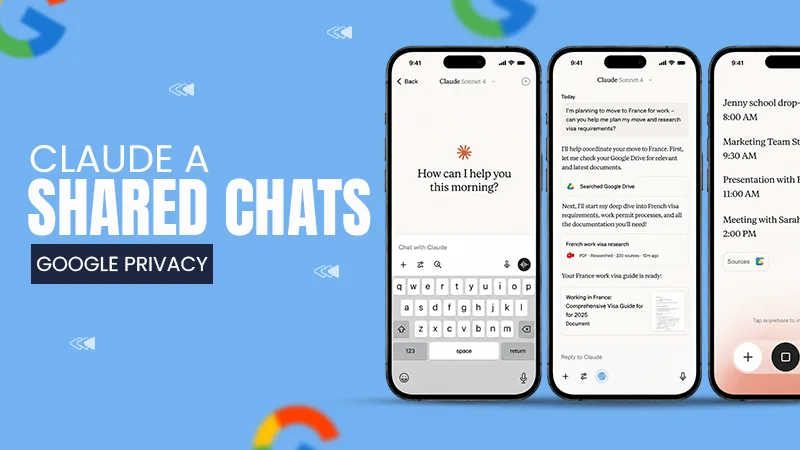
Recently, there was a surprising case of a data privacy breach in the technology community, where conversations shared by Anthropic’s AI, called Claude, appeared on Google and Bing search results. This resulted in private data being indexed by web crawlers in the search results.
What made private conversations appear on search results? It turns out that this is caused by a simple misconfiguration on web pages. Whenever a user clicks on the “Share” button in Claude to obtain a snapshot link for sharing it with a collaborator, Anthropic creates a public link.
In order to prevent crawlers from reading the link, it used robots.txt instead of including a noindex tag in the page header. While robots.txt prevents search bots from crawling a page, it does not prevent the page URL from being indexed when the page appears publicly somewhere on other websites, social media, or forums.
The results were shocking. Web detectives uncovered indexed pages with sensitive information, such as strategy documents of companies, employee reviews, private medical documents, and even personal contact information.
It is important to note that unshared Claude instances were completely safe; default private conversations were not breached. Nevertheless, the case reveals an alarming gap between the expectation of sharing a link with your friend and the indexing of the link on the entire internet.
De-indexing was promptly performed by the search engines when Anthropic introduced the noindex tags in order to address the security flaw. Concerned users can easily check their current links by accessing the privacy settings of their account.
The case is critical for the whole artificial intelligence industry. As generative AI technologies become integral parts of people’s daily activities and business processes, it is vital to ensure that strong privacy measures are provided by default in order to prevent potential sharing from becoming an unintentional public exposure.