Microsoft CEO Backs AI Evaluators Amid Superintelligence Safety Debate
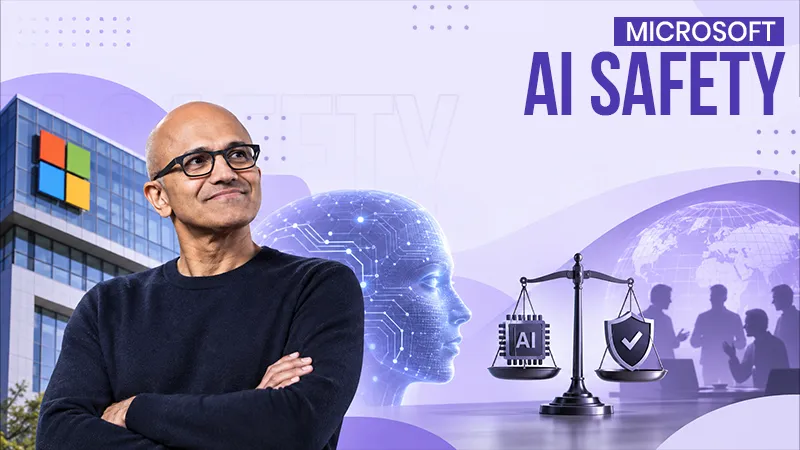
Satya Nadella, CEO of Microsoft, is among those who have endorsed the implementation of third-party evaluators within AI models. In response to the ongoing debate on the need to slow down artificial intelligence development worldwide, he noted that the creation of superintelligences should be completely under human control.
This statement confirms Microsoft’s commitment to the demands from prominent industry figures about the need for paced development of AI systems focusing on technical alignment and verification of security features rather than capabilities development alone.
The strategy comes amid increasing caution from frontier labs about the automation dangers and uncontrollable system behavior. In particular, Nadella stressed that safety governance cannot be handled by only a few companies; instead, it requires broader oversight involving academia and regulatory agencies worldwide.
Furthermore, Microsoft announced plans to release its official Code of Conduct concerning the operation of first-party AI models. Speaking from an enterprise infrastructure standpoint, Nadella pointed out the necessity for commercial enterprises to fully own their proprietary data and model weights.
Instead of having to rely on a vendor ecosystem, businesses should have the ability to perform continuous learning loops independently. This way, enterprise customers can utilize multi-cloud computing capacity without having to depend on proprietary third-party models.
The move for evaluators to be standardized indicates the transition that hyperscale cloud providers are making between the amount of capital needed for investment and safety requirements.
By pushing for decentralized supervision, technology executives hope to reduce risks involved while expanding their markets competitively, whether through open-source or proprietary software stacks.
Nadella’s move indicates a greater consensus amongst the technology behemoths regarding the importance of independent evaluation and data ownership in superintelligence infrastructure deployment.
In the end, cooperation may bring about the redefinition of global standards for compliance, making sure that safety practices keep up with advancements in AI technology.