Making Sense of the Panic Over Chinese AI: Moonshot AI’s Kimi K3 Explained
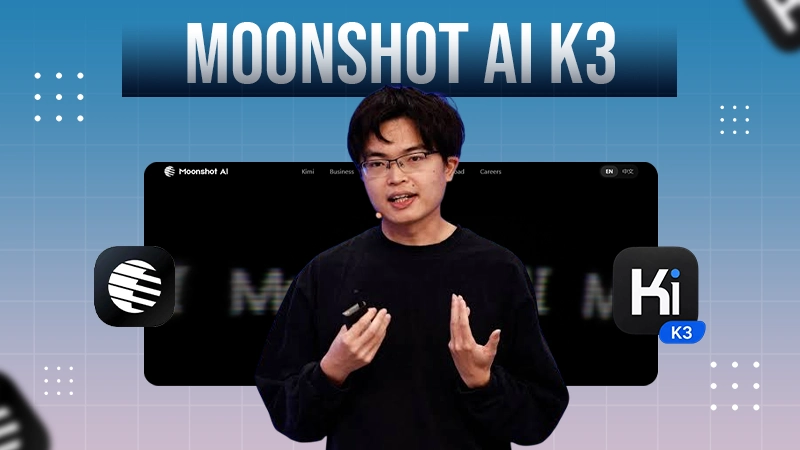
With the advent of any new artificial intelligence model coming out of foreign territory, Silicon Valley becomes a hotbed of activity in anticipation. The latest comes from the Chinese startup Moonshot AI with the launch of their model named Kimi K3. It is an enormous 2.8 trillion-parameter open-source model that immediately takes the lead as the largest publicly released model, overtaking the earlier record of 1.6 trillion parameters held by DeepSeek.
This model is capable of handling a million tokens within one prompt, creating interactive 3D environments based on still images. It immediately took the number one position on the LLM Arena leaderboard and generated an interface clone of macOS within 30 minutes. Most significantly, its benchmark performance put it above Western models such as the Anthropic Claude Fable 5 and the OpenAI GPT-5.6 Sol.
The unexpected performance breakthrough reignited a heated political discussion over technology superiority and trade policies. The issue was first sounded out by OpenAI’s executive Dean Ball, after which industry watchers started noting a trend of fear, uncertainty, and doubt policy cycle for achieving domestic regulatory advantages.
Meanwhile, David Sacks of the U.S. administration warned that strict regulations in data centers might hamper American progress, and Chinese President Xi Jinping appealed to global cooperation in AI development. However, experienced tech pundits advise adopting a calmer approach to the situation.
Although Kimi K3’s open-weight model provides unmatched opportunities to the global developer community, in terms of cost and flexibility, sensational stories about immediate OS reproduction are usually just visual presentations, but not full software implementations.
Historical evidence proves that breakthroughs in the open-source field don’t hinder commercial progress, instead forcing tech giants with closed-source to actually add value to their products. In lieu of succumbing to impulsive protectionist fears, the international software industry is better served by viewing open-source achievements as desirable and even essential competition.