Nvidia Demonstrates That Software Harnesses, Not Just AI Models, Drive Real Performance
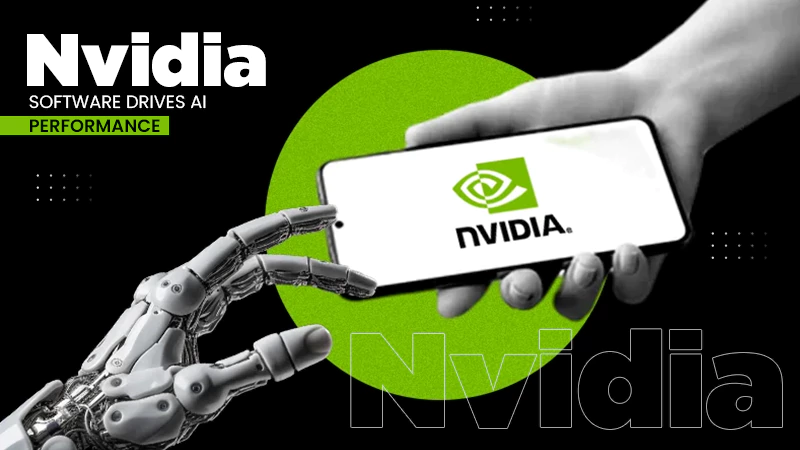
Until now, the AI race was all about creating increasingly larger and parameter-heavy foundation models. Yet breakthrough research by Nvidia proves that the software framework or the “harness” that is built around an AI model is a key factor in completing multi-step tasks.
Recent testing of AI models on the ARC-AGI-3 benchmark, which involves the completion of interactive tasks within a two-dimensional game in the absence of pre-set instructions, found that Anthropic’s Claude Opus 5 achieved only a score of 30% using the regular framework for executing prompts.
Yet putting the same family of models through Nvidia’s proprietary Agentic Variation Operators (AVO) software framework resulted in achieving a perfect score of 100% on all 183 levels of the publicly available test suite.
The huge jump underscores the importance of outer-loop infrastructure. Multi-step tasks differ from simple Q&A prompts in that agents have to explore unfamiliar environments, keep track of their previous attempts, and learn from their mistakes without falling into repetition loops.
All these are done through the utilization of persistent memory, tool availability, runtime environment, and the supervisor surrounding the central model within the Nvidia AVO paradigm. As a CEO would do, the supervisor keeps checking on the entire process to ensure that the central model doesn’t take dead-end routes.
According to Adel El Hallak, who is the vice president of products in Nvidia’s artificial intelligence division, any good artificial intelligence agent should never be regarded as a simple API call but rather should be viewed as an ecosystem where context management, feedback, and runtime environment decide its success.
This study indicates a fundamental change in the operation of software development. While selecting a suitable base model is critical, engineering is quickly shifting toward developing smarter software harnesses. Tuning these harnesses would enable companies to solve problems at a human level while keeping compute costs low.