TCS Pivots Aggressively Toward AI Workforce Overhaul to Neutralize Outsourcing Disruption Risks
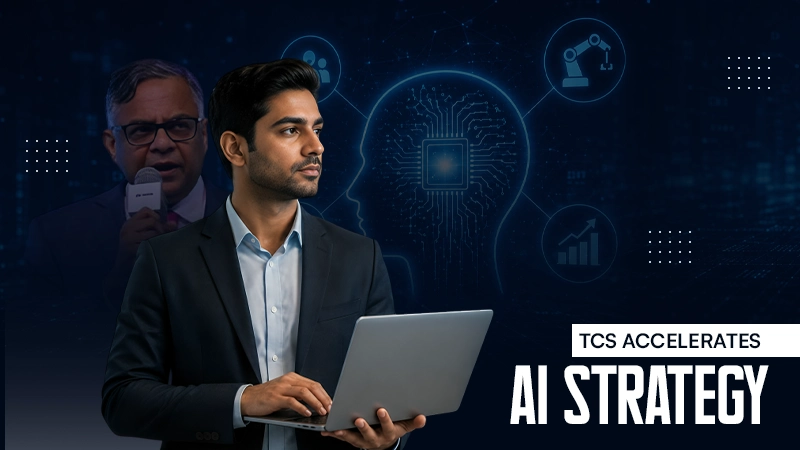
A radical change in the standard playbook of India’s technology outsourcing industry is underway. In reaction to concerns from investors that the emergence of artificial intelligence will render engineers irrelevant and drive down prices, Tata Consultancy Services is taking a proactive approach to defending against these changes.
The software company has plans to utilize an army of up to 8,900 engineers to transform the manner in which core technological operations occur at the company. The reconfiguration of workers seeks to ensure that 1% to 1.5% of the overall workforce of the company is on-site with clients to facilitate the development of custom data models and the implementation of automation.
Instead of being used as remote engineers, these teams will integrate into client organizations to work in tandem with them to develop custom solutions. Rather than viewing artificial intelligence as a threat to their business, Tata Consultancy Services sees it as a growth opportunity, asserting that integration of complex multi-model systems requires institutional knowledge.
In addition to this colossal internal shift, the multinational has started transforming its conventional growth strategy by looking for targeted corporate acquisitions abroad. Following decades of rejecting acquisitions for growth through internal expansion, the company is evaluating options for acquisitions in areas related to AI technologies, data architecture, and cybersecurity to establish itself in the digital space.
This organizational shift comes at a financially sensitive time when the company’s growth in revenue from generative technology has declined to 13% annually. In order to facilitate this transition, the outsourcing company is investing an estimated $1 billion per year into optimizing its talent and making software accessible.
Through distinguishing between purely cost-driven assets and specialized human talents, the company is trying to make the case that human consulting skills form the essential bridge for the implementation of corporate technologies.