World Secures $52.5M Token Sale to Transform Biometric Identity for the Deepfake Era
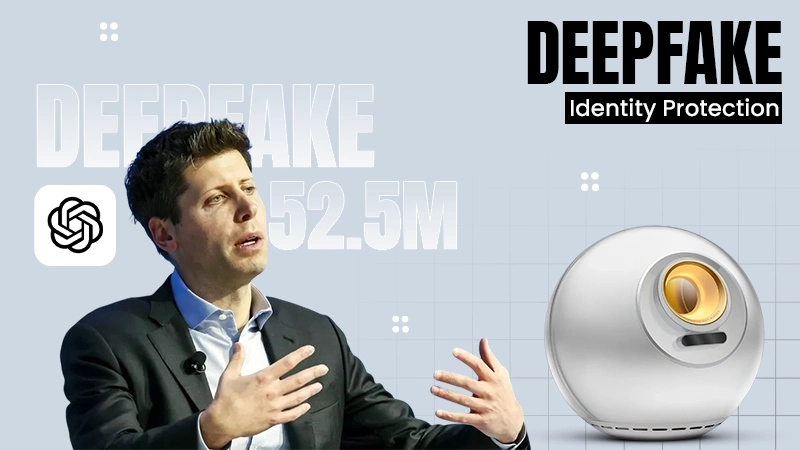
With the creation of realistic media through artificial intelligence and the use of autonomous software programs online, human verification has become one of the hardest tasks. In order to counter the emerging threat, World, a digital identity project started by the CEO of OpenAI, Sam Altman, under the name of Worldcoin, has received $52.5 million from token sales.
The newly injected capital will be utilized by the project during its pivot from its initial goal of distributing cryptocurrency globally towards the creation of identity infrastructure suited for business needs. The project uses “Orb”, its proprietary hardware, to conduct iris scanning, and provides its users with a private yet secure proof-of-personhood identity credential.
The company has been successful in verifying over 17.5 million people up to this point, providing a base for human verification in a highly automated web environment. The pivot into the business sphere is showing promising results. World has managed to integrate its software with platforms such as Zoom and DocuSign.
The key point is very simple: as generative deepfakes advance in their quality, the companies require a rock-solid assurance, backed by hardware, that the individual attending a video call or signing a legally binding document is not a bot but indeed a real person.
In spite of being under increased regulatory pressure in multiple countries due to biometric collection practices, the company is rapidly deploying its hardware around the world. The newly raised money will be used for next-gen Orb deployments, software improvements of the company’s identity protocol, and enterprise partnerships.
By presenting physical biometric authentication as an essential safeguard against deepfake fraudsters, World creates a whole verification layer for today’s software. As artificial intelligence advances in making human-like actions, verifying the person’s existence online becomes increasingly important.