
Anthropic Establishes Physical Biology Lab to Advance AI Research
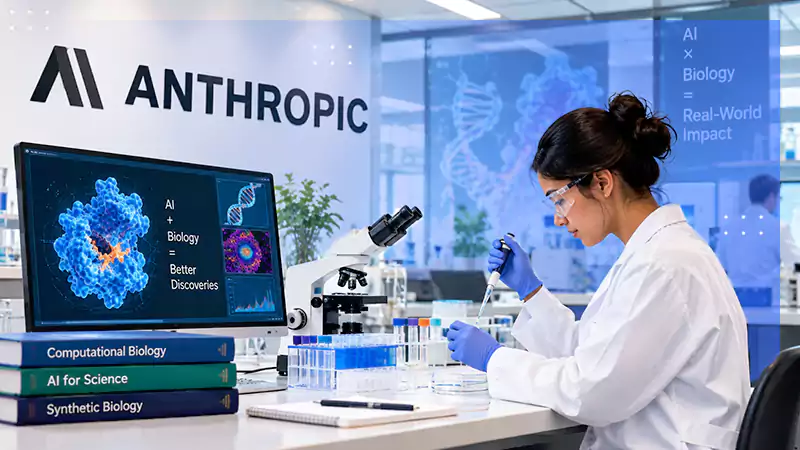
Anthropic, a company that develops artificial intelligence technology, has now acknowledged the existence of its physical wet lab that will undertake experiments involving biological systems.
The head of Anthropic’s Life Sciences division, Eric Kauderer-Abrams, is the key figure behind this operation that signifies a massive shift from the digital realm of computer simulations to the physical one of biological wet labs.
Anthropic’s physical lab undertakes biological experimentation related to basic science and early-stage drug development using Claude models that control automation of lab equipment.
In order not to conflict with pharmaceutical partners, Anthropic aims at fundamental research and neglected diseases that other companies ignore. Anthropic employs humans who strictly monitor all automated procedures. For the development of the push forward in life sciences, Anthropic has released the Life Sciences Verification Program and has also purchased biotech startup Coefficient Bio.
With the internal validation of generative models using biological data, Anthropic increases efficiency in the process of conducting research while ensuring technical standards of automated laboratory equipment. This physical hardware shows a trend that is taking place in the industry of using physical-world validation in frontier artificial intelligence labs.
As technological developers invest capital into the processes of automating laboratories, physical wet labs become increasingly necessary for verifying complex scientific predictions. The laboratory of biology in Anthropic creates a foundation for scientific discovery using AI, showing how frontier models can interact safely with physical laboratory infrastructures.
Also, using digital training models along with the physical verification of biological hypotheses decreases the number of experimental cycles that need to be done.