Google Empowers Chrome With Gemini Spark Auto Browse to Automate Complex Web Tasks
The repetitive tasks done online are now being greatly improved with the change that Google is making to its AI technology from conversation-driven to autonomous.
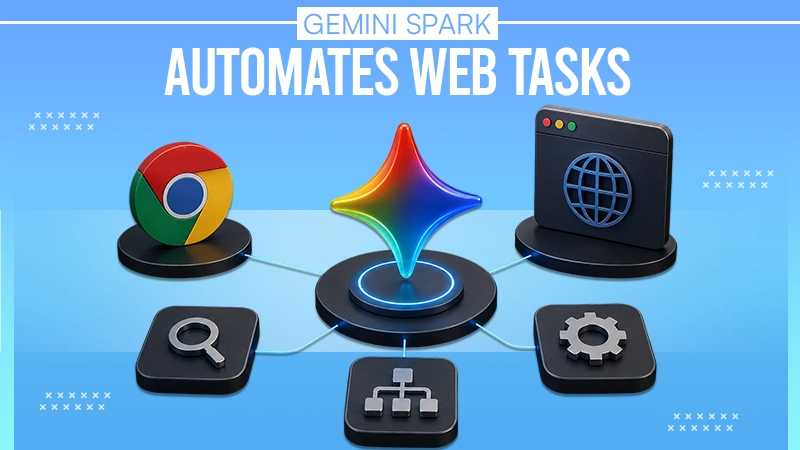
As part of a significant desktop upgrade, Google has formally embedded its autonomous assistant, Gemini Spark, in the Chrome browser with the addition of an impressive “Auto Browse” function, which is capable of performing intricate, multi-step web tasks for the user.
With Auto Browse, Gemini in Chrome transitions from being a mere side-panel assistant to becoming a browsing agent. Leveraging the capabilities of the Gemini framework, Auto Browse enables the AI to browse through various sites using permissions and logged-in accounts of the user.
Instead of compelling users to navigate through the tabs manually, Gemini Spark can independently perform actions like researching travel plans, comparing products on e-commerce sites, adding items to the cart, booking property appointments, and scheduling tables at restaurants on interconnected websites.
As always, safety and control remain key concerns while deploying the functionality. To avoid any unintended actions or prompt injection vulnerabilities, Google imposes very clear limitations. Gemini Spark will not autonomously perform financial transactions, accept terms of service, or conduct high-stakes account transactions.
Whenever the automated process comes to such an action, the program stops and transfers the responsibility back to the user, who will then confirm the operation manually. Auto Browse is currently being rolled out in the United States as part of the preview for those who have paid for the subscription to Google AI Pro and Google AI Ultra plans.
There are different daily limitations based on the subscription package that allow up to 20 or up to 200 requests daily for AI Pro and Ultra, respectively. By integrating the ability for autonomous web browsing into the most-used browser worldwide, Google has changed the way people use the internet. The transition of web usage from manual clicking to intelligent monitoring represents a huge leap forward.