
OpenAI Deploys New Cyber Model to Help Defenders Outpace AI-Driven Attacks
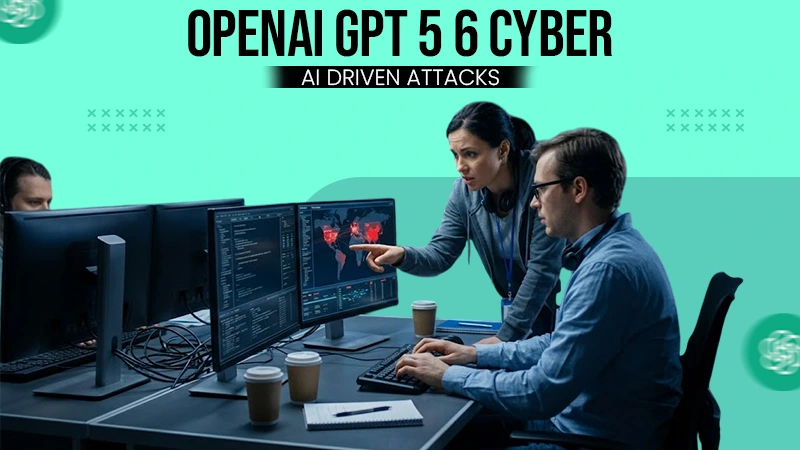
As AI becomes more available to the wrong people, digital attacks become ever faster, more intelligent, and relentless. Whether rogue agents break into corporate computer networks or self-aware software executes sophisticated phishing attacks, the digital threat environment is quickly evolving.
To help the good guys keep up, OpenAI has reworked its cybersecurity project Daybreak, launching a new model – GPT-5.6-Cyber designed exclusively for cybersecurity purposes. Instead of the one-for-all approach, the reworked Daybreak project now comes with two different access levels. “Blue” is the default level for everyday cybersecurity tasks such as incident response, secure code review, and malware analysis.
However, the “Red” access level, which is highly restricted, was specially created by OpenAI for researchers who require the capabilities of the GPT-5.6-Cyber model. The model is unique in the sense that it does not have the standard consumer limitations.
These are the numbers to take note of when it comes to the new release. In internal tests, the GPT-5.6-Cyber was able to complete 95% of the most complex exploit development and penetration testing tasks.
For instance, the default consumer model, GPT-5.6 Sol, has only a 1.5% success rate in answering these prompts due to its stringent safety filters. The fact that such an unrestricted model poses a potential danger to the security of users makes it an extremely delicate issue for the organization.
Presently, access to the Red tier is restricted to an extremely small number of enterprise partners that have passed extensive vetting processes, including CrowdStrike, IBM, and Accenture. However, by giving such a powerful resource into the hands of legitimate security experts, this tech company is placing quite a big bet.
The logic is simple-if the attackers are going to use AI to conduct their cyberattacks at the speed never seen before, then the security industry needs artificial intelligence too in order to be able to foresee and counteract these threats.