
Reliable Robotics Reaches Unicorn Status With New $115 Million Funding Round
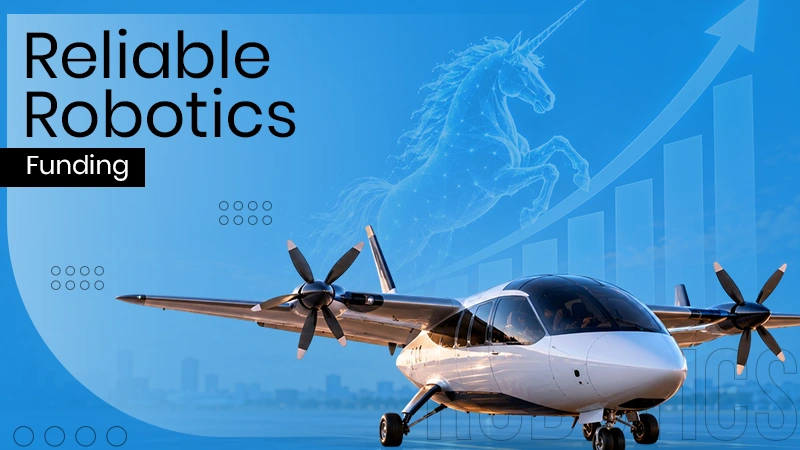
Independent flying aircraft company Reliable Robotics has formally closed on $115 million in new funding, which has now taken its valuation above the $1 billion mark. Started by ex-SpaceX employees, the Mountain View firm raised additional funding in its Series D round to hasten its rollout of automated flying technology in the commercial cargo industry and military aviation.
The funding is made up of $90 million in equity headed by Nimble Partners and $25 million in debt funding by Silicon Valley Bank. This new round takes the total amount of Series D funding raised by the firm to $275 million, making a cumulative total of $380 million in equity and debt funds.
By technical description, Reliable Robotics provides retrofitted flight control solutions that automatically perform all stages of operations, ranging from taxiing and takeoffs to landings in fixed-wing aircraft without any need for pilots.
Remote aircraft are controlled by remote operators through ground-based control stations, thereby greatly reducing labor costs and improving efficiency in remote logistics supply chains. Indeed, the company has successfully performed flights that were fully automated on regional cargo aircraft such as the Cessna Caravan.
The increase in valuation demonstrates the increasing commercial interest in autonomous logistics amid the shortage of pilots, which continues to plague regional freight logistics operations.
By retrofitting existing airframes rather than developing entirely new aircraft types, Reliable Robotics can circumvent manufacturing constraints and be poised to seize market share in automated cargo transportation services.
The emergence of Reliable Robotics as a unicorn company marks a rising interest from investors in the field of self-driving aircraft and becomes an important benchmark in moving towards automation in regional logistics networks.
Commercialization of the system will mean that it is possible to deliver more often to hard-to-reach areas without having to recruit additional employees. As legislation changes to allow unmanned flying vehicles, autonomous systems can become a backbone of future air supply chain operations worldwide.