
SpaceX’s First Earnings Report Reveals the Massive Cost of Becoming an AI Giant
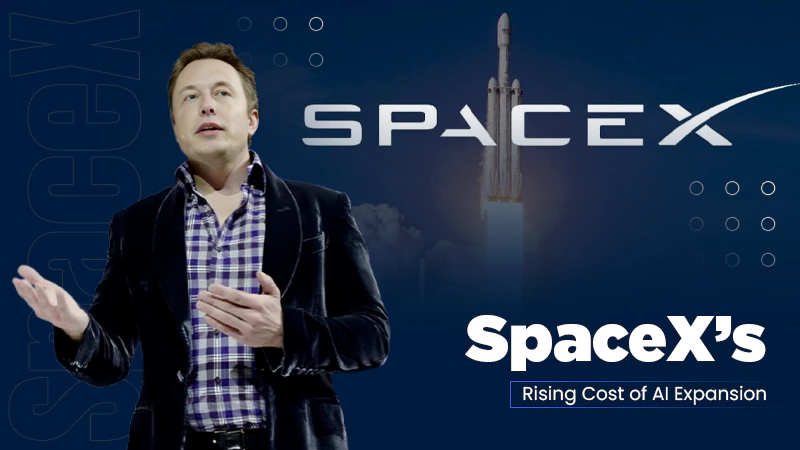
Space exploration coupled with the creation of the artificial intelligence infrastructure calls for unparalleled financial muscle. In its groundbreaking first-ever quarterly earnings report following its going public debut, SpaceX offered a glimpse into what the real cost looks like for a rocket innovator to turn into a leading AI computing enterprise.
Although the total figures gave a push to the top-line figures, where there were total revenues of $7.8 billion in Q2 2021, an impressive 92% growth from Q2 2020, it was due to the company’s satellite internet constellation called Starlink, where it generated $4.29 billion in revenues and $1.66 billion in operating profits.
The revenues of the new artificial intelligence unit of the company amounted to $2.56 billion, which is a testament to the growth of 247% year over year, due to highly demanded cloud services and software. However, the focus quickly moved onto the staggering capital expenditures of SpaceX.
The result of extensive investments in advanced processing chips, data centers, and orbital hardware, total quarterly capital expenditures increased to $18.4 billion, exceeding total quarterly revenues. More than $15.8 billion of the spending was directed solely at increasing AI compute capabilities. Therefore, the loss for the quarter for AI business was $1.26 billion, while the loss from space launch activities was $542 million.
The company executives, CEO Elon Musk and CFO Bret Johnsen, clarified to the investors that the capital expenditures would generate profits within a year. According to them, the company is on course to achieve $100 billion annualized revenue by the end of the year, thanks to the expansion of Starlink and the compute leasing deals made with industry players.
The company is utilizing the profits earned through satellite communications to fund its aggressive move towards high-performance computing. Despite the heavy capital expenditures resulting in financial losses, creating AI infrastructure and satellite capability will give the company a competitive edge in the coming era of global tech connectivity.