Aina Secures $5.5M to Replace Outdated Keyboards With Hardware Tailored for Autonomous AI Agents
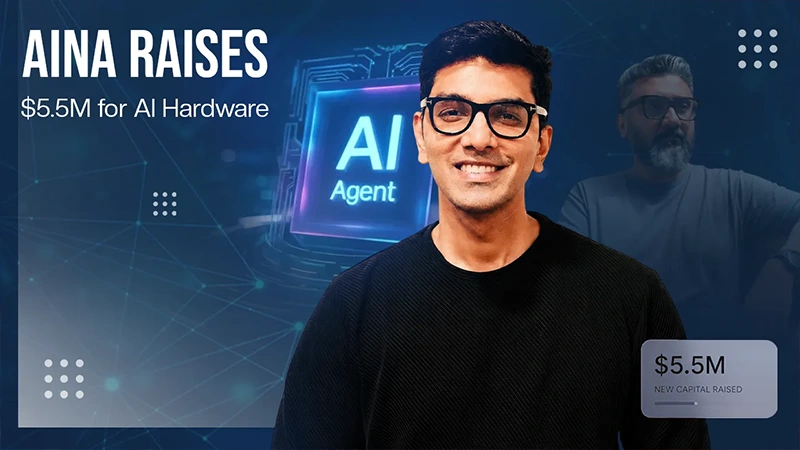
Physical devices used to interact with computers have not changed much since the 1980s, despite rapid progress in the development of artificial intelligence. In an attempt to circumvent this bottleneck, the startup called Aina managed to raise $5.5 million in seed funding. The goal of the company is to develop a physical interface that will be designed for controlling autonomous AI agents rather than devices which that only passively capture data.
The company was founded by Apoorv Shankar, who used to lead device development at Ultrahuman (a health technology company) as its Vice President of Hardware. Initially operating as a human-computer interaction laboratory known as Project Mirage, the startup has been operating under dual headquarters in San Francisco and Bengaluru.
This new fundraising round, led by Redstart Labs and 360 ONE Asset includes substantial participation from Blume Founders Fund, Antler, MIXI Global Investments, as well as angel investors such as Kunal Shah (founder of WhatsApp) and Harshil Mathur & Shashank Kumar (co-founders of Razorpay).
The design concept aims at the cognitive fatigue created by modern touchscreen devices and keyboards. Aina had experimented with various specialty devices at CES 2026, such as a video call remote control known as Radiance and a single-button activator referred to as Shift.
However, the startup gained commercial success in April with a product known as Dune, which is a small mechanical keypad for Mac with three buttons that adjust themselves based on the foreground application. Consequently, users can use the keypad for scripting and controlling cameras effortlessly. With new funding, Aina plans to introduce an interface designed as an ultimate human approval layer.
Instead of opening numerous tabs for ride booking and complicated schedule management, the upcoming product assumes that the hard work of booking rides and managing schedules will be done by AI agents, and humans need to approve choices just by pressing a button.