
AMD Challenges Nvidia Dominance With $5B Anthropic Stake and Massive Chip Deal
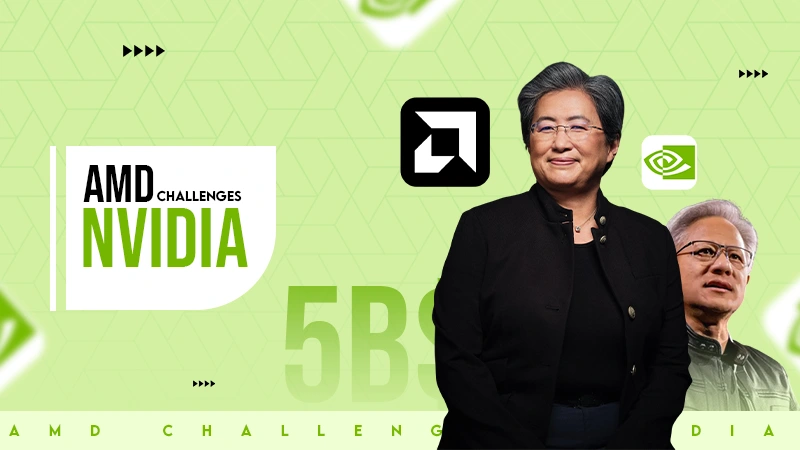
The high-stakes race for hardware dominance in artificial intelligence just kicked into another gear. Under the terms of an historic pact set to upend Silicon Valley, semiconductor giant AMD is making a strategic equity investment in Claude-builder Anthropic worth up to $5 billion.
In exchange, Anthropic is set to employ up to two gigawatts of AMD’s next-generation Instinct MI450 accelerators, providing the rapidly growing company with a colossal amount of compute power for future generations of its platform.
The expansive pact marks a crucial commercial win for AMD CEO Dr. Lisa Su, continuing her push to position the chip giant as the clear alternative to dominant incumbent Nvidia. Expected to be deployed in the first half of 2027, the move will leverage AMD’s Helios rack-scale systems with their combination of MI455X GPUs, EPYC “Venice” CPUs, and cutting-edge Pensando networking.
Anthropic is planning to deploy this system on-premises in its own data centers, as well as lease further capacity from key cloud and neocloud partners. For Anthropic, the mega-deal serves to solve an operational problem directly and promptly. The company was faced with some operational bottlenecks as a result of soaring enterprise interest in its state-of-the-art Claude AI model family.
Having diversified its compute ecosystem beyond previous partnerships with Google, Amazon, and SpaceX, Anthropic ensures sufficient compute capacity to train its models regardless of hardware manufacturer. Along with financial investment and hardware supply, the two companies are planning to embark on a joint multi-year collaboration. AMD will incorporate Claude in its software development process, while Anthropic will leverage its generative AI models to enhance the performance of the ROCm open source software stack developed by AMD.
By tying up capital with Anthropic’s future hardware procurement efforts, AMD is not only selling silicon chips to the company but actually co-constructing the underlying hardware infrastructure of future waves of AI models.